
How a Professional Protective Coating Is Applied From Start to Finish
The step-by-step process of professional ceramic coating application starts with deep cleaning and paint correction, followed by careful surface prep, coating application, curing, and a final inspection. Each step builds on the one before it. When done the right way, the result is strong, long-lasting protection and a glossy finish that is easier to clean and maintain.
What You Need Before Starting
Before applying ceramic coating, the vehicle must be in proper condition. The surface cannot be dirty, oily, or scratched. The coating locks in whatever is underneath it. That means prep work matters more than people think.
Here is what professionals gather before starting:
- High-quality car wash soap and clean water
- Clay bar or clay mitt for decontamination
- Paint correction tools like polishers and pads
- Panel wipe or alcohol-based surface prep spray
- Applicator pads and microfiber towels
- Proper lighting to see flaws in the paint
This service is often part of auto detailing because detailing focuses on cleaning and restoring the vehicle before protection is added.
The Step-by-Step Application Process
Here is how professionals apply ceramic coating the right way:
- Thorough wash: The car is hand washed to remove dirt and road grime.
- Chemical decontamination: Iron removers and tar removers break down hidden contaminants.
- Clay bar treatment: A clay bar removes bonded particles the wash did not remove.
- Paint correction: Light scratches and swirl marks are polished out. This creates a smooth base.
- Surface prep wipe: A special cleaner removes polishing oils so the coating can bond.
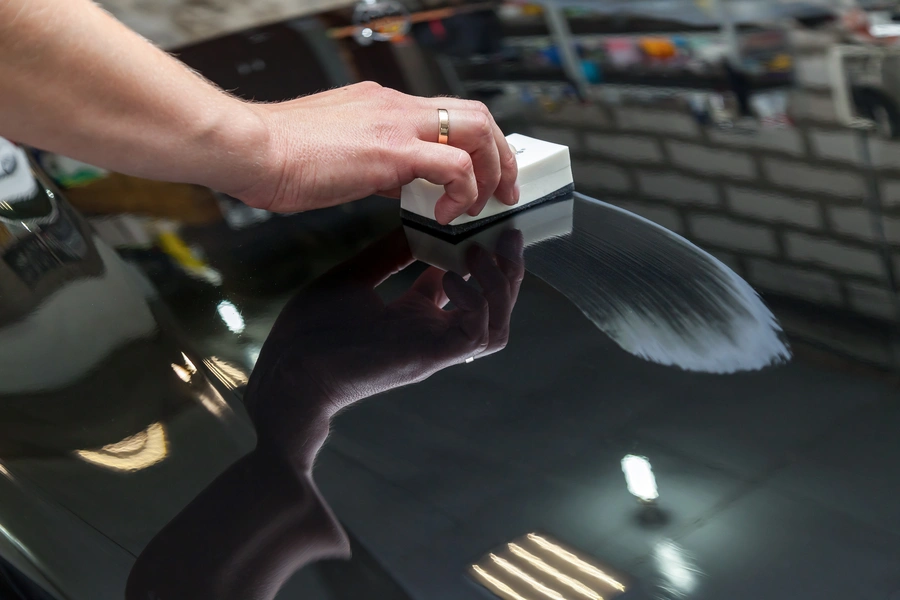
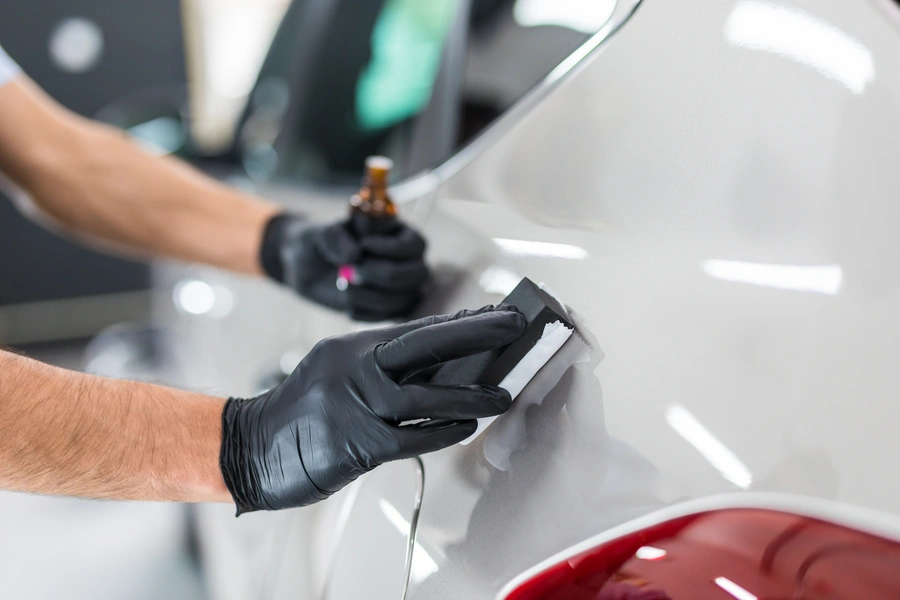
- Careful coating application: The ceramic coating is applied in small sections with an applicator pad.
- Leveling and buffing: After a short flash time, the surface is gently wiped to remove high spots.
- Curing time: The vehicle stays indoors while the coating hardens.
- Final inspection: The surface is checked under bright light for missed spots or streaks.
Each panel is treated slowly and evenly. Rushing can cause streaks or uneven protection. Proper curing is also key. Some coatings need several hours indoors without moisture exposure.
Common Mistakes to Avoid
Applying ceramic coating without training often leads to problems. Many issues come from poor prep work or rushing.
Here are common mistakes:
- Skipping paint correction and sealing in scratches
- Applying too much product at once
- Working in direct sunlight or high humidity
- Not leveling high spots before curing
- Letting the surface get wet too soon
Once the coating hardens, fixing mistakes can require polishing the area again. That means removing part or all of the coating and starting over.
When to Call a Professional
Some car owners try DIY kits. While these products help, they usually offer shorter durability and less protection. Professional-grade ceramic coating products are stronger and require skill to install correctly.
If your vehicle has swirl marks, oxidation, or water spot damage, professional prep work makes a big difference. Dark-colored cars, luxury vehicles, and brand-new cars also benefit from expert application. A trained team has the tools, lighting, and controlled indoor space needed for proper bonding and curing.
Is Professional Application Worth It?
Professional ceramic coating can last for years with proper care. It helps protect against UV rays, road salt, light scratches, bird droppings, and tree sap. It also makes washing faster because dirt does not stick as easily.
If you want long-term shine and easier maintenance, professional installation is often the better choice. The key is proper prep, careful application, and safe curing conditions.
Ready to Protect Your Vehicle the Right Way?
If you are in Charleston, SC and want expert help, we apply ceramic coating with careful prep and attention to detail. At CX Car Detailing Service, we walk our customers through every step so they know what their vehicle is getting. Call us at (843) 256-8149 to schedule your service or ask questions about protecting your car for the long haul.